Hi James,
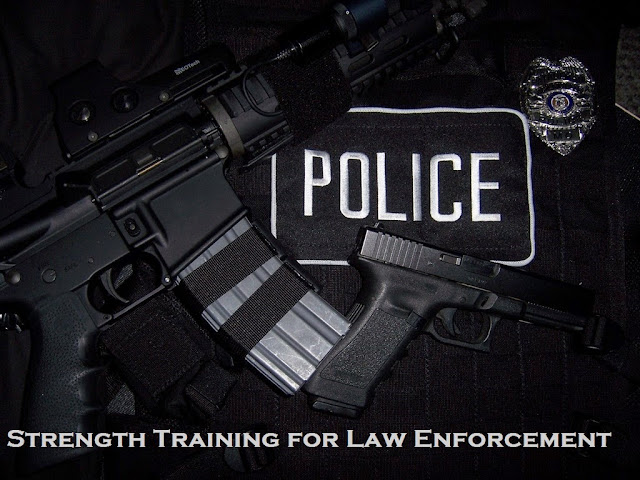
I'm currently studying criminology and plan on working for my local police. At the same time I have had a burning passion for fitness/health/working out and want to be a personal trainer. For the last 6 months ever since I've entered the university, I have been in a constant tug of war between choosing to be a personal trainer and a police officer.
I came by your articles and found out that you are a police officer, personal trainer and Asian-American (like myself). It's really inspiring to see someone like that.
My question is:
Would majoring in criminology, minoring in kinesiology and a certificate in personal training be a good idea to pursue a job similar to yours?
Thanks,
Aaron L.
My Answer: I was an independent trainer before becoming a peace officer. I stopped training once I started law enforcement, but resumed training clients off-duty a few years into my career. Then I stopped training once I had a daughter.
There are pros and cons to both jobs. The great thing about law enforcement is that it is real world work. You have to deal with people, both good and bad. You take responsibility for your actions and you take care of your community. You have a sense of civic duty. You're a leader, not some clueless office drone insulated from reality. You deal with real problems and real situations.
The role of a police officer is larger than life, so initially the job is psychologically overwhelming. But over the years you'll grow into the role. You'll learn and develop a wide variety of skills, since law enforcement provides numerous specialties. You will mature and become a better person as a result.
Depending on the department, the pay and benefits are good. Some departments better than others. 3% @ 50 is the gold standard for retirement.
As far as drawbacks to law enforcement, there are many. For one thing, shift work is very tough on the body. People who do shift work are 30% more likely to develop cancer. The stress of the job wreaks havoc on your health, as well as your marriage. Plus it sucks not seeing your kid on holidays.
Law enforcement is a dangerous job. This is a given. But it is dangerous on many levels. Obviously bad guys resist, but sometimes they also carry diseases. God forbid you get stuck with a needle from a drug user.
People view you differently, once they know you are law enforcement. Some people admire law enforcement, and other people use law enforcement as a whipping boy for society's ills.
Now as far as personal training, it is a very tough business to get into. The problem with personal training is that there are no real standards set. On one end, you have personal trainers who are high school and college kids being paid minimum wage with only an in-house certification. Then on the other end, you have high end trainers being paid $150 an hour.
Part of the reason that personal training is all over the map is that the public can't figure out a good trainer from a bad trainer. Certifications don't mean jack, because the public doesn't know about certifications, let alone differentiate an easy certification from a high quality certification. Plus the public can't figure out good personal training from crappy personal training. People think personal trainers are like doctors, since they're supposed to know about nutrition and exercise. But most personal trainers are simply bullshitting about the science aspects of diet and training, because they don't know anything beyond how to do the exercises.
Most trainers don't make much of a living. The ones that do make a living have 4 things:
1) They have a lot training knowledge and experience.
2) They're very good teachers. They can observe people and troubleshoot their form. They can explain complex topics in simple language. They can motivate people to train and stick to their diet.
3) They're extremely good at marketing themselves.
4) They don't just rely on their clientele for their business. They have multiple streams of income (i.e. books, articles, etc.)
5) They have a lot of satisfied clients who refer other people to them.
Now, should you choose personal training or law enforcement? Does a criminology degree or a kinesiology degree help? Does a certification help?
In my experience, none of that helps. I know most police officers do not have a criminal justice degree. It doesn't matter. You learn everything in the police academy and during the first few years on the job. Many agencies like to recruit people from a wide range of backgrounds, so that they can have officers and special agents with a wide variety of talents and expertise. It doesn't hurt to have a criminology degree, but most officers I know don't have it.
A minor in kinesiology is fine, but again, plenty of personal trainers without a kinesiology background. Personal trainers, especially these in-house trainers, don't utilize kinesiology as much as business and sales.
If you get a certification, then get one that will provide a lot of business support. People in the industry always point to the NSCA certification (which I have) or the ACSM certification as the best certifications to get. But quite frankly, your clients don't give a shit as to what certification you have. They can't tell the difference. Plus these certifications don't do anything to help you with getting your personal training business off the ground. They just take your money and call you certified. If you do get certified, then I would suggest something like ISSA, which provides business support.
Bottom line: keep majoring in criminology and minoring in kinesiology. Start training as a in-house trainer to get the experience and see how the gym business works. When you're eligible, start applying for your local PD, because it will be a long process before you get hired. You might as well explore the personal training field while you're waiting. Also do a ride along with the PD's you plan to apply to.
Good luck!
Tuesday, February 28, 2012
Thursday, February 23, 2012
Monday, February 20, 2012
Ascending Order of Pull-up Difficulty
James,
I was trying to make sure that I am doing different exercises on each workout. I am doing close grip pulldowns on workouts #4, and for workout #3 I am trying to incorporate Back/Biceps/Delt in one exercise. So pull-ups is the answer?
I was trying to follow the routine. I guess I thought of using some weights, because the reps are 6-8. Should I just do as many as possible? Never thought of shoulders being taxed enough, but you know best!
Oh, and I am going to find a gym while I am skiing. I am so close to achieving the body I want that I have to continue even out there. I am at a point where I feel everything I do counts more. Before I wasn’t in shape, and if I missed working out or eating then it didn’t affect me as much.
That is my biggest problem now is eating. I don’t like to eat as much as I need to or as often as I should. And I am married with kids too. That makes dinners hard, because either they don’t eat and food (money) is sitting there going to be thrown out. Or just making stuff that they will eat which isn’t the best for me is the other problem.
Thanks,
-D
My Answer: Yes do pull-ups. If the workout calls for 6-8 reps, then do a pull-up variation where you perform 6-8 reps max. So if you can only perform 3-5 pull-ups, then that's perfectly fine.
If you can do 10-12 regular full range pull-ups, then do a harder pull-up variation wher you can do 6-8 reps max. Here are some pull-up variations in ascending order difficulty:
Mixed grip chin-ups (moderately difficult)
Sternum chin-ups (difficult)
Subscapularis Pull-ups (extremely difficult)
As for diet, I understand it's very difficult with family and kids. Ever since my daughter was born, I've just been eating like crap. My girl is a picky eater, so I end up eating whatever she doesn't want, which could be anything from Gummy Bears to mac and cheese.
What I do with regard to diet is damage control. During work I make sure I don't get hungry. I make sure I eat enough good quality protein and drink a lot of water. Since work and commuting takes up 11 hours of my 16 hour waking day, I'm eating clean 11/16th's or 69% of the time.
I was trying to make sure that I am doing different exercises on each workout. I am doing close grip pulldowns on workouts #4, and for workout #3 I am trying to incorporate Back/Biceps/Delt in one exercise. So pull-ups is the answer?
I was trying to follow the routine. I guess I thought of using some weights, because the reps are 6-8. Should I just do as many as possible? Never thought of shoulders being taxed enough, but you know best!
Oh, and I am going to find a gym while I am skiing. I am so close to achieving the body I want that I have to continue even out there. I am at a point where I feel everything I do counts more. Before I wasn’t in shape, and if I missed working out or eating then it didn’t affect me as much.
That is my biggest problem now is eating. I don’t like to eat as much as I need to or as often as I should. And I am married with kids too. That makes dinners hard, because either they don’t eat and food (money) is sitting there going to be thrown out. Or just making stuff that they will eat which isn’t the best for me is the other problem.
Thanks,
-D
My Answer: Yes do pull-ups. If the workout calls for 6-8 reps, then do a pull-up variation where you perform 6-8 reps max. So if you can only perform 3-5 pull-ups, then that's perfectly fine.
If you can do 10-12 regular full range pull-ups, then do a harder pull-up variation wher you can do 6-8 reps max. Here are some pull-up variations in ascending order difficulty:
Mixed grip chin-ups (moderately difficult)
Sternum chin-ups (difficult)
Subscapularis Pull-ups (extremely difficult)
As for diet, I understand it's very difficult with family and kids. Ever since my daughter was born, I've just been eating like crap. My girl is a picky eater, so I end up eating whatever she doesn't want, which could be anything from Gummy Bears to mac and cheese.
What I do with regard to diet is damage control. During work I make sure I don't get hungry. I make sure I eat enough good quality protein and drink a lot of water. Since work and commuting takes up 11 hours of my 16 hour waking day, I'm eating clean 11/16th's or 69% of the time.
Saturday, February 18, 2012
Not Doing Chin-ups? THEN SLAP YOURSELF!
James,
I am trying to put together a volume decompression workout. So far I think I got it worked out, but I am looking for an exercise other than reverse grip pulldowns for back/biceps/delts. Do you have a suggestion?
Thanks,
-D
My Answer: Chin-ups. If you can't do chin-ups, then shame on you!
I'm kidding. But you really got ask yourself why you can't or won't do chin-ups. If you don't want to do chin-ups because you can't do many and you don't want to appear weak at the gym, then slap yourself. Set your ego aside at the door and do the chin-ups.
If you don't want to do chin-ups because they're hard to do, then you should slap yourself and quit being so lazy. Exercise is supposed to be hard work. Exercise should not be impossible to do nor should it be injurious to the body , but it should be somewhat difficult to do.
If you can't do a single chin-up at all, then do some partner-assisted negative chin-ups one workout a week. 3-5 rep negative reps is all you need to do. For your other back workouts, choose a different back exercise that's not a pull-up or chin-up.
Saturday, February 11, 2012
Kettlebell Swings on the Return to Copland Workout
Hello James,
I am a police officer and I want to try the workout that is posted on Bodybuilding.com. I just have a couple questions:
First, I see that you have workouts for weeks 1&2 and weeks 4&5. Is week 3 a rest week? If week 3 is a rest week, do you recommend doing some cardio or something or strictly rest?
Second, in weeks 1&2 in workout #3 exercise D: I can't find a video or description for swings. I was wondering if you could explain swings for me or provide a video. Thanks for the workout and thank you for your time.
-J. F.
My Answer: That's a typo. Week 3 is actually Week 4. So do Weeks 1 and 2 and then on Week 3 go directly to the Decompression program and follow that for 2 weeks.
Swings refer to kettlebell swings. You can either do them 2-handed or one-handed:
I am a police officer and I want to try the workout that is posted on Bodybuilding.com. I just have a couple questions:
First, I see that you have workouts for weeks 1&2 and weeks 4&5. Is week 3 a rest week? If week 3 is a rest week, do you recommend doing some cardio or something or strictly rest?
Second, in weeks 1&2 in workout #3 exercise D: I can't find a video or description for swings. I was wondering if you could explain swings for me or provide a video. Thanks for the workout and thank you for your time.
-J. F.
My Answer: That's a typo. Week 3 is actually Week 4. So do Weeks 1 and 2 and then on Week 3 go directly to the Decompression program and follow that for 2 weeks.
Swings refer to kettlebell swings. You can either do them 2-handed or one-handed:
Labels:
kettlebells,
law enforcement
Friday, February 10, 2012
Stressing the Entire Force Curve
James,
I enjoy all of the books, and I feel I grasp somewhat the concept of the density training. But I get lost when trying to make my own routines up. More specifically the exercises and how you decide to put them together. For example the trisets on the density training. I can’t believe the gains I have gotten through your routines, and I want to understand more so I can keep the gains coming. Are you going to come out with any more books?
Thanks,
-D
My Answer: I do plan to write one more book, and in this 5th (and possibly final) book, I will go into more detail about exercise selection and the principles governing the construction of your own routines. When I create trisets and compound sets, I look at 2 things when selecting exercises:
1) Stressing each portion of the force curve
2) Stressing all portions of a muscle
So let's just use the biceps area as an example. When you curl, you will feel the weight more or less at certain portions of the movement. If you do preacher curls, then the beginning range of the movement will be the hardest portion to work through. If you do barbell curls, then the midrange is the hardest. And if you do spider curls, then the top range or contracted position is the most difficult.
So if you're constructing a triset for the biceps, then you would string together 3 exercises that hit each portion of force curve:
I'm sure you've noticed that you get an incredible pump when you perform the trisets or compound sets I list in Volume One and Two. This is not just because you're performing a lot of reps. It's also because you're hitting the full range of the force curve, which activates a greater number of muscle fibers.
The other thing I consider when constructing compound sets and trisets is that I want to stress all portions of a muscle. Let's consider the triceps. The triceps consists of three heads: lateral, medial and long head. You should know from reading Volume One that the lateral and medial heads of the triceps are activated by pressing movements, while the long head is activated by extensions. So if you wanted to create a compound set for the triceps, then you would string an extension movement with a pressing movement:
My name is Pavel. I read your article Complete Strength Routine on Bodybuilding.com. Very, very good article! Thank you for writing it! I was wondering if you could give me work of advice on my workout program.
My Answer: Your cardio and supplementation looks fine. What I would revamp is your strength training routine. If youur goal is to increase chin-ups, pushups and sit-ups, then you must do chin-ups, pushups and sit-ups at every workout.
Plus your volume is way too high. You're doing 3 body parts per workout, 4 exercises for each body part, 2-3 sets per exercise. That's 36 sets per workout, which translates to about an hour and a half depending on how long you rest in between sets. That's way too long. Your workout should not be any longer than an hour, and you should not be performing any more than 20-24 sets per workout.
Here's what you can do:
I enjoy all of the books, and I feel I grasp somewhat the concept of the density training. But I get lost when trying to make my own routines up. More specifically the exercises and how you decide to put them together. For example the trisets on the density training. I can’t believe the gains I have gotten through your routines, and I want to understand more so I can keep the gains coming. Are you going to come out with any more books?
Thanks,
-D
My Answer: I do plan to write one more book, and in this 5th (and possibly final) book, I will go into more detail about exercise selection and the principles governing the construction of your own routines. When I create trisets and compound sets, I look at 2 things when selecting exercises:
1) Stressing each portion of the force curve
2) Stressing all portions of a muscle
So let's just use the biceps area as an example. When you curl, you will feel the weight more or less at certain portions of the movement. If you do preacher curls, then the beginning range of the movement will be the hardest portion to work through. If you do barbell curls, then the midrange is the hardest. And if you do spider curls, then the top range or contracted position is the most difficult.
So if you're constructing a triset for the biceps, then you would string together 3 exercises that hit each portion of force curve:
- Spider Curls
- Standing Barbell Curls
- Preacher Curls
I'm sure you've noticed that you get an incredible pump when you perform the trisets or compound sets I list in Volume One and Two. This is not just because you're performing a lot of reps. It's also because you're hitting the full range of the force curve, which activates a greater number of muscle fibers.
The other thing I consider when constructing compound sets and trisets is that I want to stress all portions of a muscle. Let's consider the triceps. The triceps consists of three heads: lateral, medial and long head. You should know from reading Volume One that the lateral and medial heads of the triceps are activated by pressing movements, while the long head is activated by extensions. So if you wanted to create a compound set for the triceps, then you would string an extension movement with a pressing movement:
- Lying triceps extensions
- Close grip bench press
First I will tell you about my background, my goal, time frame and what I'm planning to do. And I hope you could maybe correct me, if anything needs to be corrected.
OK, here's my background: I'm 24 years old. I'm 6'2", 200 lbs. with about 20-25% bodyfat. I have been working out for about 6 years. Last 2 years, because of my education, I was on and off with the workouts and for the last 8 months I stopped completely. So now I'm out of shape, but I do have some muscle.
My goal: I want to join the Air Force, and for that I need to get good results on the physical tests. I have approximately 3 months, and I started working out last week.
During these next 3 months I have nothing else I need to do (no school or work), so I can dedicate myself 100% to the workouts. My ultimate goal is:
55-60 push-ups
16-18 chin-ups
60-70 sit-ups
9:20 on a 3km run (1.6 miles) or 12 minutes on a 2 mile run
Here is my plan: I'm going on a strict diet (high protein, high fiber, medium carbs and fat) 500-1000 calories less than what I'm used to. I want to get read of that extra fat. That should help me on all the tests.
I got all the supplements I need: Creatine, Glutamine, Arginine, BCAA, Whey, Casein and Beta Alanine. This should help me push as hard as I can and recover quickly. I got ACG3 as a pre-workout, which seems to work amazing for me. I can pump really hard. I was surprised how much I took, after 1 week of workouts. "C4 thermal-shock" to help me get rid of fat.
For my workout, I want to do strength and some endurance. Here is my plan:
Monday - 5km jog in the morning. Chest, shoulders, abs workout in the evening 4 exercises for each muscle group, 2-3 sets, 4-6reps.
Tuesday - jog in the morning, Back, Biceps, Shrugs w/o in the evening
Wednesday - Jog in the morning, Legs, Triceps, Abs w/o in the evening
Thursday - day off/easy swimming for stamina/steam room
Friday - same muscles as Monday, 3-4 exercise for each muscle, 4 sets with 20reps or to failure (failure should be about 20 reps)
Saturday - same muscles as Tuesday, same routine as Friday.
Sunday - day off.
When I workout, I try to isolate muscles, so I don't use muscles I don't workout that day. Morning jog will slowly be increased to 10km. But I will vary between increasing distance and speed. I need a certain amount of kilometers to be able to hit target of 9:20, but I need to increase my strength as well, so I don't want to jog more than 60-70km a week.
Before each workout I'll do a 10 minute jog as a warm-up. I'm going to try to increase my speed all the time to get as close to my target speed as possible.
I know I need to do some interval training, but I just don't see where I can squeeze it in. Maybe have it as warm-up before my workout?
Last 3 weeks before my test, I will do mostly jogging with a lot of interval training and a specific program on push-ups and chin-ups.
If it's not too much trouble for you, could you please give me some feedback? Should I change anything to reach my goal, or does it looks good?
Thank you very much!
Best Regards,
Pavel
OK, here's my background: I'm 24 years old. I'm 6'2", 200 lbs. with about 20-25% bodyfat. I have been working out for about 6 years. Last 2 years, because of my education, I was on and off with the workouts and for the last 8 months I stopped completely. So now I'm out of shape, but I do have some muscle.
My goal: I want to join the Air Force, and for that I need to get good results on the physical tests. I have approximately 3 months, and I started working out last week.
During these next 3 months I have nothing else I need to do (no school or work), so I can dedicate myself 100% to the workouts. My ultimate goal is:
55-60 push-ups
16-18 chin-ups
60-70 sit-ups
9:20 on a 3km run (1.6 miles) or 12 minutes on a 2 mile run
Here is my plan: I'm going on a strict diet (high protein, high fiber, medium carbs and fat) 500-1000 calories less than what I'm used to. I want to get read of that extra fat. That should help me on all the tests.
I got all the supplements I need: Creatine, Glutamine, Arginine, BCAA, Whey, Casein and Beta Alanine. This should help me push as hard as I can and recover quickly. I got ACG3 as a pre-workout, which seems to work amazing for me. I can pump really hard. I was surprised how much I took, after 1 week of workouts. "C4 thermal-shock" to help me get rid of fat.
For my workout, I want to do strength and some endurance. Here is my plan:
Monday - 5km jog in the morning. Chest, shoulders, abs workout in the evening 4 exercises for each muscle group, 2-3 sets, 4-6reps.
Tuesday - jog in the morning, Back, Biceps, Shrugs w/o in the evening
Wednesday - Jog in the morning, Legs, Triceps, Abs w/o in the evening
Thursday - day off/easy swimming for stamina/steam room
Friday - same muscles as Monday, 3-4 exercise for each muscle, 4 sets with 20reps or to failure (failure should be about 20 reps)
Saturday - same muscles as Tuesday, same routine as Friday.
Sunday - day off.
When I workout, I try to isolate muscles, so I don't use muscles I don't workout that day. Morning jog will slowly be increased to 10km. But I will vary between increasing distance and speed. I need a certain amount of kilometers to be able to hit target of 9:20, but I need to increase my strength as well, so I don't want to jog more than 60-70km a week.
Before each workout I'll do a 10 minute jog as a warm-up. I'm going to try to increase my speed all the time to get as close to my target speed as possible.
I know I need to do some interval training, but I just don't see where I can squeeze it in. Maybe have it as warm-up before my workout?
Last 3 weeks before my test, I will do mostly jogging with a lot of interval training and a specific program on push-ups and chin-ups.
If it's not too much trouble for you, could you please give me some feedback? Should I change anything to reach my goal, or does it looks good?
Thank you very much!
Best Regards,
Pavel
My Answer: Your cardio and supplementation looks fine. What I would revamp is your strength training routine. If youur goal is to increase chin-ups, pushups and sit-ups, then you must do chin-ups, pushups and sit-ups at every workout.
Plus your volume is way too high. You're doing 3 body parts per workout, 4 exercises for each body part, 2-3 sets per exercise. That's 36 sets per workout, which translates to about an hour and a half depending on how long you rest in between sets. That's way too long. Your workout should not be any longer than an hour, and you should not be performing any more than 20-24 sets per workout.
Here's what you can do:
- Perform 1 set of chin-ups, pushups and sit-ups at the beginning of every workout. Do as many reps as you can short of failure. Consider this your warm-up and ditch the 10 minute jog (you're already running in the morning).
- Follow the workouts you have planned, but bring the number of exercises per body part down to 2 instead of 4 sets.
Monday, February 6, 2012
Thursday, February 2, 2012
Take A Break from Training During Vacations
James,
I completed the 13 weeks of density and the decompression training. Finishing up the Chest specialization and now wondering what would you suggest instead of specialization training again? I thought of going back to the density training, but do you have any other suggestions?
What stinks is I am going on a ski trip in 7 weeks. The hotel has a decent gym but the only free weights are dumbbells.
Thanks,
-D
My Answer: I say go back to the density phase in Neo-Classical Bodybuilding. Alternate between density and decompression for the next 7 weeks. When you go on your ski trip, just take a week off from training. This will give your muscles and nervous system a much needed break.
When you come back from your trip, your body should be refreshed and ready to tackle the weights. You can either start over with a density phase or do another specialization routine.
Have fun skiing!
I completed the 13 weeks of density and the decompression training. Finishing up the Chest specialization and now wondering what would you suggest instead of specialization training again? I thought of going back to the density training, but do you have any other suggestions?
What stinks is I am going on a ski trip in 7 weeks. The hotel has a decent gym but the only free weights are dumbbells.
Thanks,
-D
My Answer: I say go back to the density phase in Neo-Classical Bodybuilding. Alternate between density and decompression for the next 7 weeks. When you go on your ski trip, just take a week off from training. This will give your muscles and nervous system a much needed break.
When you come back from your trip, your body should be refreshed and ready to tackle the weights. You can either start over with a density phase or do another specialization routine.
Have fun skiing!
Labels:
layoffs,
Strength and Physique
Subscribe to:
Posts (Atom)